
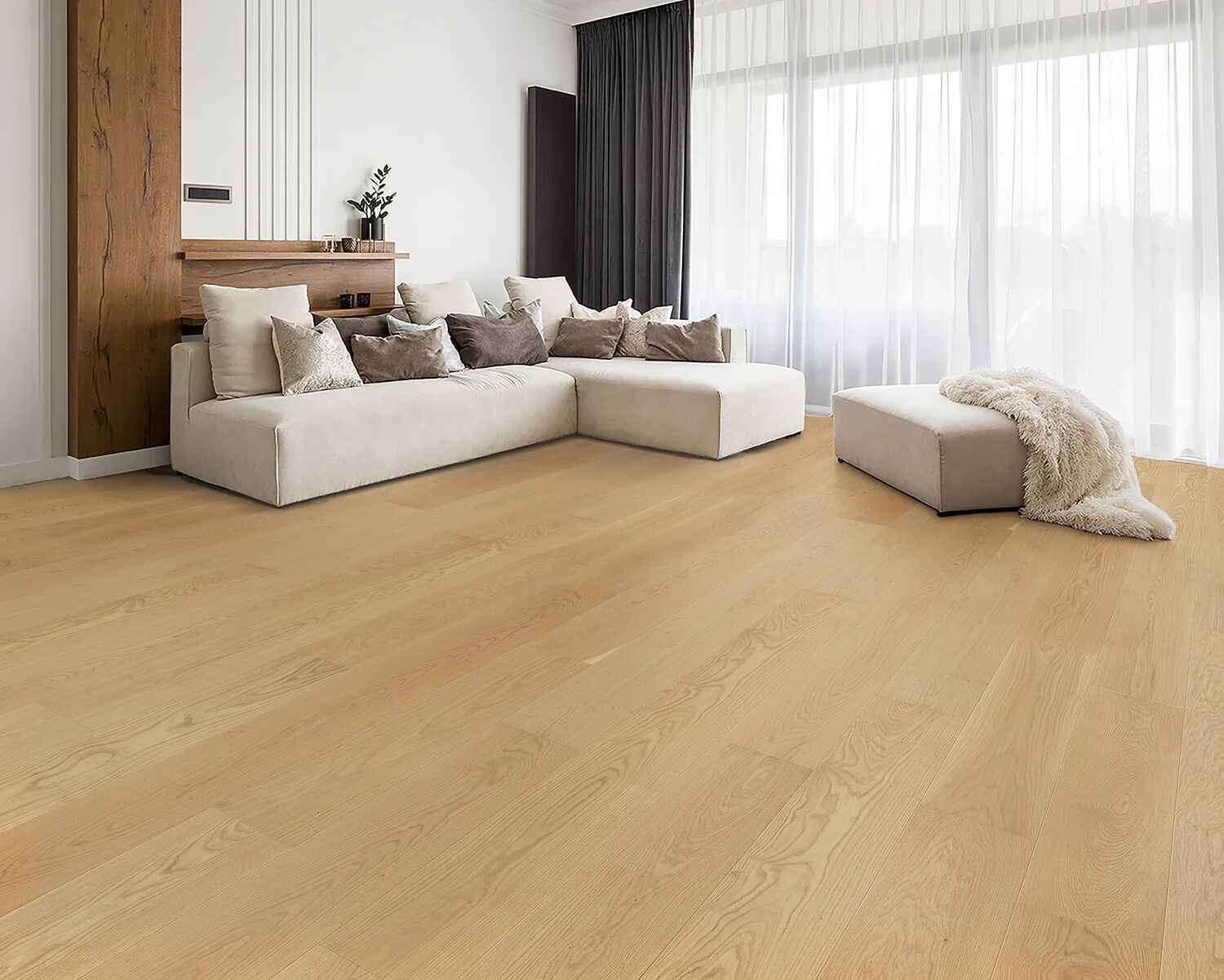
When it comes to timeless beauty, durability, and versatility, white oak flooring continues to be one of the most popular choices among homeowners and designers. Its natural grain patterns, strength, and ability to complement various interior styles make it a preferred option for both modern and traditional spaces.
If you’re considering white oak hardwood flooring for your home, it’s important to understand its advantages, drawbacks, and alternative flooring options before making a final decision.
What Is White Oak Flooring?
White oak flooring is made from the wood of the white oak tree, a hardwood species known for its dense structure and attractive appearance. Unlike red oak, white oak features a tighter grain pattern and cooler undertones, making it a favorite for contemporary and minimalist designs.
Many homeowners choose white oak hardwood floors because they offer a balance of elegance and practicality. The wood accepts stains exceptionally well, allowing for a wide range of finishes from natural blonde tones to rich dark shades.
Pros of White Oak Flooring
1. Exceptional Durability
One of the biggest benefits of white oak hardwood flooring is its durability. White oak ranks around 1360 on the Janka hardness scale, making it resistant to dents, scratches, and everyday wear.
This makes it an excellent choice for:
- High-traffic areas
- Living rooms
- Hallways
- Family homes with children and pets
2. Beautiful Natural Appearance
White oak features subtle grain patterns and a sophisticated texture that adds character without overwhelming a room. Its neutral tones blend seamlessly with a variety of décor styles, including:
- Modern
- Farmhouse
- Scandinavian
- Coastal
- Traditional
The versatility of white oak hardwood floors allows homeowners to update their interior design over time without replacing their flooring.
3. Excellent Moisture Resistance
Compared to many other hardwood species, white oak offers better resistance to moisture due to its closed cellular structure. While it’s not waterproof, it performs better in environments where humidity levels fluctuate.
This added moisture resistance helps reduce the risk of warping and swelling.
4. Wide Range of Finishes
One reason white oak flooring remains popular is its ability to absorb stains evenly. Whether you prefer a light natural look or a darker contemporary finish, white oak provides numerous customization options.
Popular finishes include:
- Natural matte
- Wire-brushed
- Smoked oak
- Gray-washed
- Dark espresso
5. Long Lifespan
Properly maintained white oak floors can last for decades. Because they can be sanded and refinished multiple times, homeowners often view them as a long-term investment that adds value to their property.
Cons of White Oak Flooring
1. Higher Initial Cost
Premium-quality white oak hardwood flooring typically costs more than some alternative hardwood and engineered flooring products. Material and installation expenses can increase the overall project budget.
However, many homeowners consider the long lifespan and durability worth the investment.
2. Susceptible to Scratches
Although durable, white oak is not immune to scratches. Heavy furniture, pet claws, and abrasive debris can leave marks on the surface over time.
Using furniture pads and regular cleaning can help minimize damage.
3. Requires Maintenance
Like all hardwood flooring, white oak requires routine maintenance to preserve its appearance. Spills should be cleaned promptly, and periodic refinishing may be necessary depending on wear levels.
4. Can Fade Over Time
Prolonged exposure to direct sunlight may cause color changes and fading. Window treatments and UV-protective finishes can help reduce this issue.
Popular Alternatives to White Oak Flooring
While white oak hardwood floors remain highly desirable, several alternatives may better suit specific budgets, design preferences, or performance needs.
Red Oak Flooring
Red oak flooring is often more affordable and widely available. It features warmer undertones and a more pronounced grain pattern compared to white oak.
Pros:
- Lower cost
- Easy availability
- Traditional appearance
Cons:
- Less moisture resistant
- More noticeable grain
Hickory Flooring
Hickory is one of the hardest domestic hardwoods available. It offers dramatic color variation and exceptional durability.
Pros:
- Highly durable
- Excellent for busy households
Cons:
- Rustic appearance may not suit every design style
- More difficult to install
Maple Flooring
Maple provides a clean, smooth appearance with subtle grain patterns.
Pros:
- Contemporary look
- Strong and durable
Cons:
- Doesn’t accept stains as evenly as white oak
- Limited finishing options
Engineered Hardwood Flooring
Engineered hardwood combines a real hardwood surface layer with multiple layers of plywood beneath.
Pros:
- Improved dimensional stability
- Suitable for basements and areas with humidity fluctuations
- Often more affordable
Cons:
- Limited refinishing potential depending on wear layer thickness
Luxury Vinyl Plank (LVP)
For homeowners seeking a budget-friendly alternative, luxury vinyl plank can replicate the appearance of white oak flooring at a lower cost.
Pros:
- Water-resistant
- Easy maintenance
- Affordable
Cons:
- Lower resale value compared to real hardwood
- Less authentic feel
Is White Oak Flooring Worth It?
For many homeowners, the answer is yes. The combination of durability, timeless aesthetics, moisture resistance, and long-term value makes white oak hardwood flooring one of the best flooring investments available.
Whether you’re renovating a single room or building a new home, white oak hardwood floors provide a sophisticated foundation that complements nearly any interior style.
By understanding both the advantages and limitations of white oak, you can make a more informed flooring decision that aligns with your lifestyle and budget.
Conclusion
White oak remains a leading choice in the flooring industry because of its durability, beauty, and adaptability. While there are several quality alternatives available, white oak flooring continues to deliver an ideal balance of performance and elegance for homeowners seeking long-lasting hardwood floors.
For premium hardwood flooring solutions and expert guidance, explore the extensive flooring collections available at Pennington Hardwoods.
FAQs
1. Is white oak flooring better than red oak flooring?
White oak is generally considered more durable and moisture-resistant than red oak. It also offers a more contemporary appearance with cooler undertones.
2. How long do white oak hardwood floors last?
With proper maintenance and periodic refinishing, white oak hardwood floors can last 50 years or more.
3. Are white oak floors good for homes with pets?
Yes. White oak is durable and resistant to everyday wear, making it a practical option for households with pets.
4. Can white oak flooring be refinished?
Yes. Solid white oak flooring can typically be sanded and refinished multiple times throughout its lifespan.
