
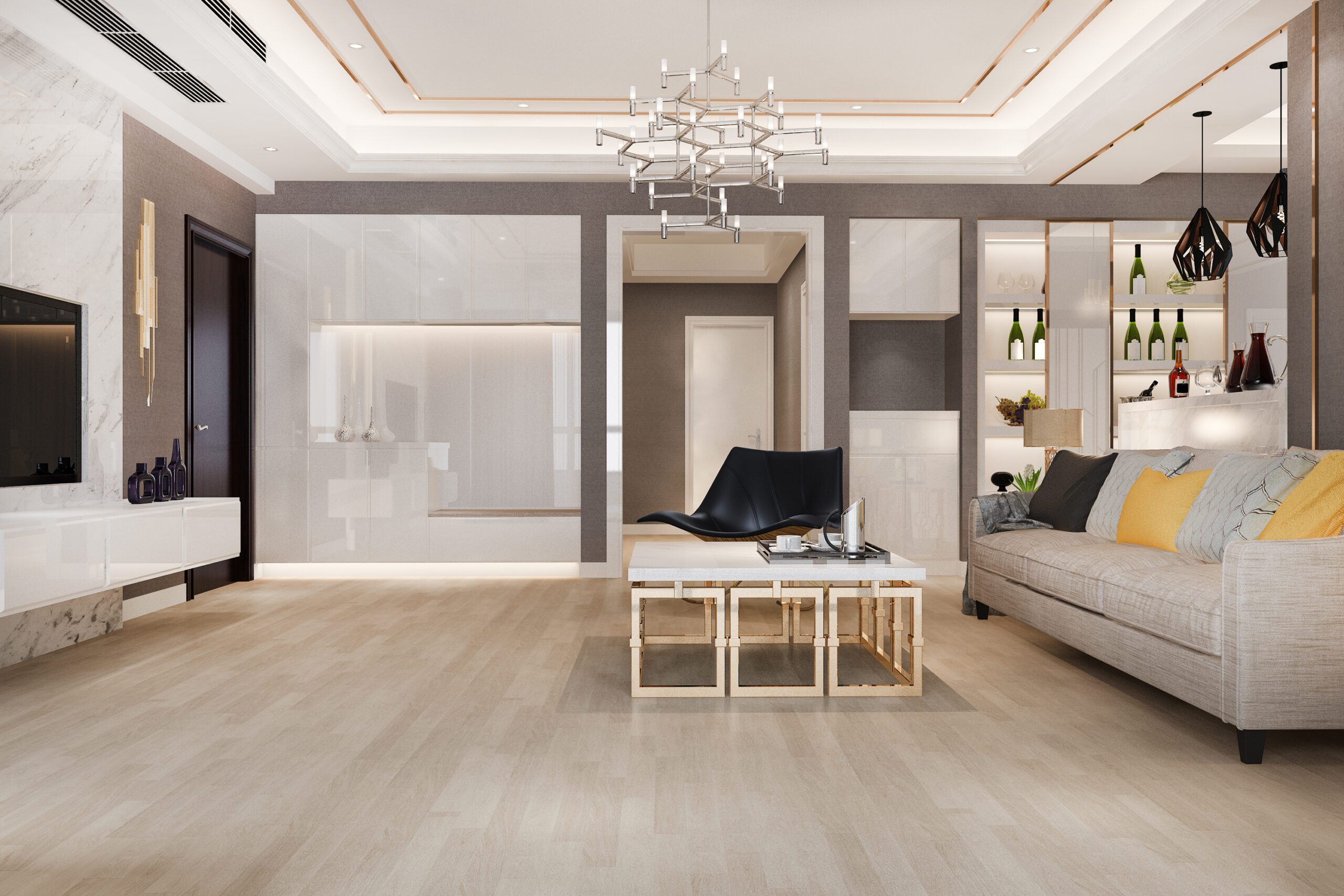
If you’re considering hardwood flooring for your home, white oak hardwood floors are one of the most versatile options to explore. White Oak combines natural character, durability, and a relatively neutral appearance that works with everything from traditional interiors to modern and contemporary spaces.
But choosing White Oak flooring involves more than selecting a wood species. The way the lumber is cut, graded, textured, stained, and finished can significantly change the appearance and performance of the finished floor.
In this guide, we’ll explain the most important things to know about white oak hardwood flooring, including cuts, grades, flooring styles, finishes, plank widths, and the difference between solid and engineered options.
What Is White Oak Hardwood Flooring?
White Oak is a domestic hardwood species widely used for flooring, cabinetry, furniture, and architectural millwork. Its natural color generally ranges from light tan and beige to soft brown, with grain patterns that can vary depending on how the lumber is cut.
One of the reasons hardwood white oak flooring is so popular is its ability to accept different stains and finishes. You can keep the wood close to its natural appearance or customize it to create a warmer, darker, lighter, or more contemporary look.
White Oak also works particularly well with wide-plank flooring, making it a popular choice for open-concept homes and larger rooms.
Why Choose White Oak Hardwood Floors?
White Oak offers a combination of characteristics that make it suitable for many residential applications.
1. Versatile Appearance
White Oak has a relatively neutral base color, making it easier to coordinate with walls, cabinetry, furniture, and other design elements.
2. Distinctive Grain
Its natural grain provides visual character without necessarily overwhelming the room. The final grain appearance depends heavily on the cut and grade selected.
3. Customization
White Oak can be stained, oiled, wire brushed, hand scraped, or finished in several different ways. This gives homeowners considerable flexibility when designing a custom floor.
4. Suitable for Different Design Styles
From farmhouse and traditional homes to minimalist and contemporary interiors, White Oak can adapt to many design directions.
5. Solid and Engineered Options
Homeowners can choose between solid White Oak and white oak engineered wood flooring, depending on the project’s installation requirements.
White Oak Flooring Cuts Explained
The way a log is sawn affects the grain pattern, appearance, stability, and overall character of the flooring.
Plain Sawn White Oak
Plain sawn, sometimes called flat sawn, is one of the most common ways lumber is cut. It tends to produce broad grain patterns and can create attractive cathedral-shaped grain.
This cut can provide a classic hardwood appearance and is commonly used for traditional and contemporary flooring designs.
Rift Sawn White Oak
Rift sawing produces a straighter and more consistent grain appearance. The method can minimize some of the dramatic grain patterns associated with plain sawn lumber.
Rift-sawn flooring is often selected when a cleaner, more linear appearance is desired.
Quarter Sawn White Oak
Quarter sawing produces distinctive grain characteristics and can reveal medullary ray patterns known as flecking.
Quarter-sawn White Oak can provide a refined, architectural appearance and is particularly attractive when the natural characteristics of the wood are meant to remain visible.
Rift and Quarter Sawn White Oak
Some flooring is produced using a combination of rift and quarter-sawn boards. This approach can provide a balance between straighter grain, natural variation, and visual character.
The best cut depends on the appearance you want and the design of the room.
Understanding White Oak Flooring Grades
Grade refers broadly to the visual characteristics and natural variation found in the wood. Depending on the manufacturer and grading system, terminology can vary, so it’s important to review actual flooring samples.
Select Grade
Select-grade flooring generally provides a cleaner and more uniform appearance, with fewer visible knots and natural variations.
It can work well for homeowners who prefer a refined and consistent floor.
#1 Common
This grade generally includes more natural character than select-grade material. You may see more color variation, knots, and grain differences.
For many homeowners, this additional variation creates a more authentic hardwood appearance.
#2 Common
#2 Common generally provides even more natural character and variation. It can be a good option for rustic, farmhouse, and character-driven interiors.
Rather than viewing variation as a flaw, many homeowners choose character grades specifically because they want the floor to look natural and lived-in.
Popular White Oak Flooring Styles
Once you’ve selected White Oak, you can customize the visual character even further through texture and finish.
Smooth White Oak Flooring
Smooth flooring provides a clean and understated appearance. It can be particularly suitable for modern interiors where the natural grain and color of the wood are the main focus.
Wire Brushed White Oak
Wire brushing gently textures the surface to emphasize the natural grain. The result is a more tactile appearance with added character.
This style works particularly well in rustic, transitional, and contemporary spaces.
Hand Scraped White Oak
Hand-scraped flooring features intentional surface variations that create a handcrafted appearance.
It can be a strong choice for homeowners looking for more texture and a relaxed, traditional feel.
Distressed White Oak
Distressed flooring intentionally incorporates characteristics that make the wood appear aged or naturally worn.
It can complement farmhouse, rustic, industrial, and vintage-inspired interiors.
Choosing the Right White Oak Floor Finish
The finish is another important part of your flooring decision. It influences both appearance and everyday maintenance.
Natural Finish
A natural finish allows the character and color of White Oak to remain the primary visual feature.
This is a popular choice for homeowners who want a light, organic appearance.
Oil Finish
Oil finishes can provide a natural-looking appearance and emphasize the texture and grain of the wood. They are often selected for custom hardwood projects where the goal is to preserve a more organic aesthetic.
Urethane Finish
Urethane finishes create a protective surface and are available in different sheen levels. They can be useful when homeowners want a balance between appearance and everyday durability.
Custom Stains
White Oak is particularly adaptable to custom staining. A carefully selected stain can shift the floor toward warmer, darker, lighter, or more neutral tones.
Always test stains on actual flooring samples before making a final decision because the same stain can look different depending on the wood, cut, grade, and lighting.
White Oak Flooring Plank Widths
Plank width can dramatically influence the appearance of a room.
Narrower boards can create a more traditional look, while wider planks can make a room feel more spacious and contemporary.
Wide-plank white oak hardwood floors are especially popular in open-concept interiors. However, the ideal width depends on room size, layout, personal preference, and the overall design of the home.
Solid vs. White Oak Engineered Wood Flooring
Another major decision is choosing between solid and engineered construction.
Solid White Oak flooring is milled from a single piece of hardwood. One advantage is that it can generally be sanded and refinished multiple times over its service life, depending on the flooring’s thickness and condition.
White oak engineered wood flooring uses a real White Oak wear layer over a multi-layer core. Its layered construction provides dimensional stability and can make it suitable for certain applications where solid flooring may be less appropriate.
Engineered flooring can be particularly useful for installations over concrete or in environments where seasonal moisture and temperature changes need to be considered.
Neither construction is automatically better. The right choice depends on the subfloor, installation environment, moisture conditions, and project requirements.
How to Choose the Best White Oak Hardwood Floors
Before purchasing your flooring, consider these factors:
- Color: Decide whether you want natural, warm, neutral, or darker tones.
- Grade: Choose between a cleaner appearance and more natural character.
- Cut: Consider plain, rift, quarter, or rift-and-quarter sawn flooring.
- Texture: Smooth, wire brushed, hand scraped, and distressed floors create different appearances.
- Width: Select a plank width that complements your room and design.
- Construction: Determine whether solid or engineered flooring is appropriate.
- Finish: Compare oil, urethane, and other finish options.
- Lifestyle: Consider pets, children, traffic, and expected maintenance.
- Interior style: Make sure the floor complements your cabinetry, furniture, walls, and architectural details.
Ordering physical samples is one of the best ways to evaluate these differences before committing to a large flooring order.
Is White Oak Flooring a Good Investment?
White Oak remains a popular choice because it offers a strong balance of natural beauty, customization, and versatility.
However, the quality and appearance of the finished floor depend on more than the species alone. Lumber selection, milling, grading, construction, finishing, and installation all contribute to the final result.
For homeowners planning a custom project, working with a flooring company that can provide different species, cuts, textures, widths, colors, and finishes can make the selection process easier.
Frequently Asked Questions
1. Are white oak hardwood floors durable?
Yes. White Oak is a durable domestic hardwood commonly used for residential flooring. However, the overall performance of a floor also depends on its construction, finish, installation, maintenance, and the amount of traffic it receives.
2. What is the difference between rift-sawn and quarter-sawn White Oak?
Both cuts create distinctive grain patterns. Rift-sawn White Oak generally has a straighter, more linear grain, while quarter-sawn White Oak can reveal prominent flecking caused by the wood’s medullary rays. The choice largely depends on the appearance you’re trying to achieve.
3. Is White Oak better than Red Oak for flooring?
Neither is universally better. White Oak generally offers a lighter, more neutral appearance, while Red Oak typically has warmer tones and more pronounced grain. Your preferred color, design style, and project requirements should guide the decision.
Final Thoughts
White oak hardwood floors offer homeowners an impressive range of design possibilities. From plain-sawn boards and traditional grades to rift- and quarter-sawn flooring, wide planks, wire-brushed textures, custom stains, and engineered construction, there are many ways to create a floor that fits your home.
The key is to look beyond the wood species and consider how the cut, grade, texture, width, construction, and finish work together.
For homeowners looking for made-to-order options and customized hardwood flooring, Pennington Hardwoods offers a wide selection of wood species, flooring styles, textures, colors, widths, and finishes to help create a floor tailored to the character and design of your home.
