
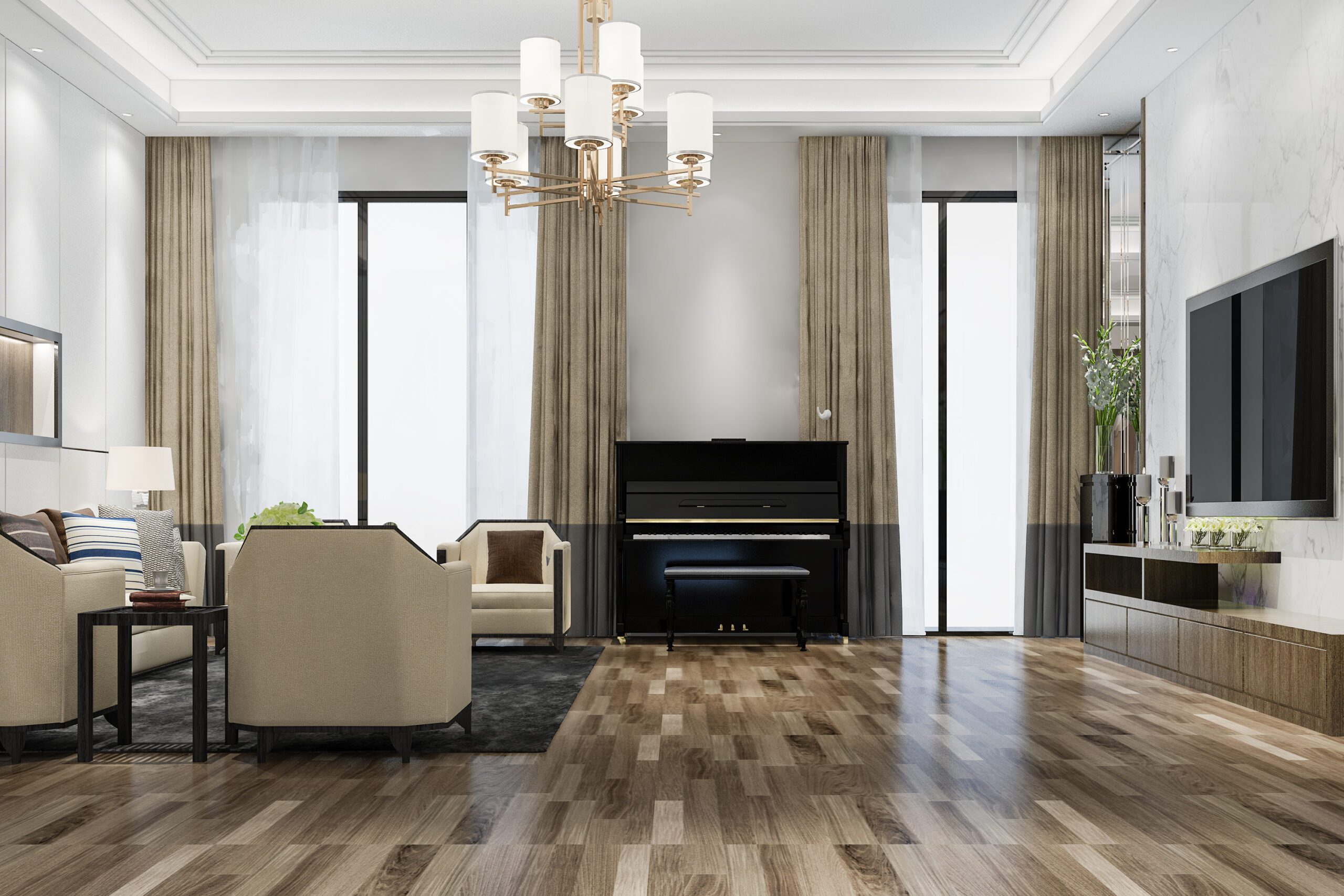
If you want the natural beauty of hardwood but need flooring that offers greater dimensional stability, white oak engineered wood flooring is an option worth considering. It combines a genuine White Oak surface with a layered construction designed to provide stability in different installation environments.
White Oak has become a popular choice for homeowners, designers, and builders because of its neutral color, attractive grain, and ability to work with a wide range of interior styles. Engineered construction can make those design possibilities suitable for applications where traditional solid hardwood may require additional consideration.
From modern living spaces to white oak flooring over concrete, engineered flooring can provide a practical and attractive solution when properly specified and installed.
What Is White Oak Engineered Wood Flooring?
White oak engineered wood flooring is made with a real White Oak wear layer on top of a multi-layer engineered core. Unlike solid hardwood, which is milled from one piece of wood, engineered flooring is constructed from multiple layers.
The top layer provides the appearance and feel of genuine White Oak, while the underlying layers are arranged to improve dimensional stability.
This construction allows homeowners to enjoy the natural characteristics of White Oak while having more flexibility for certain installation applications.
How Is Engineered White Oak Flooring Constructed?
The construction of engineered white oak flooring typically consists of several layers.
1. White Oak Wear Layer
The top layer is genuine White Oak. This is the visible portion of the floor and provides the natural grain, color, and character associated with the species.
The thickness of this layer can vary between products, so buyers should review the manufacturer’s specifications before purchasing.
2. Core Layers
Under the White Oak surface are multiple layers of wood or wood-based material. These layers are arranged in different directions to help reduce movement caused by changes in environmental conditions.
3. Backing Layer
Many engineered flooring products also include a bottom layer that contributes to the overall construction and stability of the board.
The quality and construction of the engineered floor can vary significantly between manufacturers, making product specifications important when comparing options.
Benefits of White Oak Engineered Hardwood
There are several reasons homeowners choose white oak engineered hardwood for residential flooring.
Dimensional Stability
One of the biggest advantages of engineered construction is dimensional stability. The layered structure is designed to reduce some of the expansion and contraction associated with changes in moisture and temperature.
This doesn’t mean engineered flooring is unaffected by moisture. Proper site conditions, acclimation, installation, and humidity control remain important.
Natural White Oak Appearance
Because the visible surface is genuine White Oak, engineered flooring can provide the same natural grain and character homeowners expect from hardwood.
It can also be available in different grades, textures, colors, widths, and finishes depending on the manufacturer.
Versatile Design
White Oak’s relatively neutral appearance makes it easy to coordinate with different interior styles. Natural, light, medium, and darker finishes can create very different looks from the same wood species.
Wide-plank White Oak can create a spacious appearance, while textured surfaces such as wire brushing or hand scraping can add additional character.
Flexible Applications
Engineered flooring can be considered for installation environments where solid hardwood may be more challenging, including certain concrete subfloors.
White Oak Flooring Over Concrete
White oak flooring over concrete is an application where engineered hardwood can be particularly useful.
Concrete subfloors require careful preparation and moisture evaluation before hardwood flooring is installed. Engineered construction may provide a suitable option because of its dimensional stability, but the flooring product and installation system must be compatible with the specific site conditions.
Before installation, homeowners should consider:
- Concrete moisture levels
- Subfloor flatness
- Moisture-control requirements
- Adhesive or installation method
- Manufacturer installation guidelines
- Indoor temperature and humidity
The goal is to ensure that the flooring system is appropriate for the entire installation environment, rather than selecting a product based only on appearance.
White Oak Flooring and Radiant Heat
Another application homeowners frequently ask about is white oak flooring radiant heat.
Engineered hardwood is often considered for radiant-heating systems because its layered construction can provide greater dimensional stability than solid hardwood. However, not every engineered flooring product is automatically compatible with radiant heat.
If you have radiant heating, check the flooring manufacturer’s specifications before purchasing. The type of heating system, installation method, maximum floor temperature, and moisture conditions can all affect the suitability of the flooring.
Following the manufacturer’s requirements is essential for protecting both the flooring and the heating system.
How to Choose the Right White Oak Engineered Flooring
Not all engineered White Oak floors are identical. Before buying, look beyond the species and consider the complete product.
Consider the Wear Layer
A thicker genuine White Oak wear layer can provide more potential for future refinishing, depending on the manufacturer’s specifications and the overall construction.
Choose the Right Width
Wide planks can create a modern, open appearance, while narrower boards can produce a more traditional look. Consider the size and layout of the room when choosing plank width.
Select a Grade
Different grades provide different amounts of natural variation. A cleaner grade may offer a more consistent appearance, while character grades can showcase knots, color variation, and natural features.
Compare Finishes
Oil and urethane-based finishes can create different visual and maintenance characteristics. Consider how much sheen, texture, and natural appearance you want.
Think About Texture
Smooth, wire-brushed, hand-scraped, distressed, and sawn textures can completely change the personality of a White Oak floor.
Is Engineered White Oak Better Than Solid Hardwood?
There is no universal winner between engineered and solid hardwood.
Solid White Oak may be preferred when traditional construction and extensive future refinishing potential are priorities. Engineered White Oak can be advantageous when dimensional stability and installation flexibility are important.
The right choice depends on the subfloor, moisture conditions, location, installation method, lifestyle, and project goals.
Best Applications for White Oak Engineered Wood Flooring
White Oak engineered flooring can be considered for a variety of residential applications, including:
- Living rooms
- Bedrooms
- Dining rooms
- Open-concept spaces
- Homes with concrete subfloors
- Certain radiant-heating installations
- Remodeling projects where engineered construction is preferred
For each application, verify that the specific flooring product is appropriate for the installation conditions.
Frequently Asked Questions
1. Can white oak engineered wood flooring be installed over concrete?
Yes, engineered White Oak can be suitable for certain concrete installations. However, concrete moisture, preparation, installation method, and manufacturer requirements must be evaluated before installation.
2. Is white oak engineered hardwood suitable for radiant heat?
Some engineered White Oak products are compatible with radiant heating systems. Always confirm compatibility with the specific flooring manufacturer and follow the required temperature, installation, and moisture guidelines.
3. Can engineered White Oak flooring be refinished?
Some engineered floors can be refinished, depending primarily on the thickness of the genuine White Oak wear layer and the manufacturer’s specifications. Not every engineered floor has the same refinishing potential.
4. Is engineered White Oak durable?
Engineered White Oak can be a durable flooring choice when the product is properly manufactured, installed, finished, and maintained. Durability also depends on the wear layer, finish, traffic, and household conditions.
Final Thoughts
White oak engineered wood flooring combines the natural beauty of genuine White Oak with the dimensional stability of engineered construction. Its versatility makes it an attractive option for many residential projects, particularly where installation conditions call for an engineered flooring solution.
Whether you’re considering white oak flooring over concrete, evaluating white oak flooring radiant heat compatibility, or simply looking for a customizable hardwood floor, compare construction, wear layer, grade, width, texture, and finish before making your final choice.
Pennington Hardwoods offers made-to-order hardwood flooring options in different species, widths, textures, colors, and finishes, helping homeowners create flooring that fits the design and requirements of their individual projects.
